
Table of contents
- Introduction
- What is a cybersecurity risk assessment?
- The importance of cyber risk assessment
- Who should perform a cyber risk assessment?
- Common cybersecurity risks and threats
- How to perform a cybersecurity risk assessment
- Conclusion
Introduction
The surge of cybercrime involves attacks that continue to become more complex and expensive. Cybercrime experts predict that costs from cybercrime will reach $10.5 trillion by 2025 therefore cybersecurity risk assessments need to become more essential than before. Attacks against organizations occur through the abuse of weak networks alongside software flaws together with undetected human errors.
A cybersecurity risk assessment enables businesses to locate and solve security vulnerabilities which become devastating breaches unless addressed. When organizations omit this step they become vulnerable to ransomware intrusions as well as phishing attacks from inside their operations and non-compliance issues arise. The 2017 Equifax breach revealed 147 million records because an updated vulnerability remained unpatched. This guide explains cybersecurity risk assessments while showing their significance and offers proper execution directions.

What is a cybersecurity risk assessment?
The definition of a cybersecurity risk assessment involves identifying and reducing potential threats against IT systems data and operational environments.
The goal of a cybersecurity risk assessment is to help organizations detect and lower the risks impacting their IT systems together with their data and operational functions. Modern cybersecurity threats demand active protective security measures to prevent potential audience points of weakness.
Key components of a cybersecurity risk assessment
Risk identification
Identifying Cyber weaknesses in systems, software, networks, and employee practices a cybercriminal can exploit.
Risk analysis
Assessing the impact that these threats can have on the business continuity, finances, and regulatory compliance.
Risks mitigation
Take cybersecurity mitigations like firewalls, encryption, MFA (multi-factor authentication), and user training.
Risk monitoring
Updating and improving security strategies to adapt to changing cyber threats, including keeping up with compliance requirements such as NIST, ISO 27001, GDPR, and other cybersecurity data compliance regulations
Analogy: Cybersecurity risk assessment is like a home security audit
Imagine your home. You wouldn’t leave the doors unlocked or overlook vulnerable entry points that could be used by intruders to gain access. You wouldn’t leave your door unlocked, though: you’d put in locks, security cameras and an alarm system so that no one could break in. Just like how risk assessments in cybersecurity allow businesses to discover and fix gaps in their digital defenses before they can be exploited by hackers.
The risks of neglecting cyber risk assessments
Failing to perform routine assessments for cybersecurity related risks makes organisations vulnerable to data breaches, financial loss, damage to reputation, and fines. There are had cybercrimes, including ransomware, phishing, and insider threats, that's steal customer information and grind operations to a halt.
Assessment and strengthening of security defenses are measures which protect sensitive data and keep modern business up and running, hence minimizing risk for companies.

The importance of cyber risk assessment
Organizations today must perform cyber risk assessments since they are a mandatory requirement. The absence of consistent assessment puts businesses at risk of losing data confidentiality through breaches and operational interruptions while harmful damage occurs to their public image. Security maintenance along with stability depends directly on discovering and solving vulnerabilities.
Why businesses must conduct cyber risk assessments
Preventing financial losses
Cyberattacks can have severe financial consequences, with the average data breach costing up to $4.45 million. This includes expenses for system recovery, legal fees, reputational damage, and customer loss (IBM Cost of a Data Breach Report, 2023). Regular security audits and risk assessments help businesses detect vulnerabilities early, preventing costly breaches and saving significant resources.
Ensuring business continuity
Cyberattacks don't just compromise data; they can bring business operations to a standstill, resulting in extended downtime and revenue loss. A ransomware attack, for example, has the potential to lock businesses out of critical systems for days or even weeks. Businesses can establish safety protocols at the outset to minimize the blow when a sucker punch comes in the form of a cyberattack.
Avoiding legal penalties & compliance violations
Established security regulations require multiple sectors to take specific actions including:
● NIST Cybersecurity Framework
● CISA Cybersecurity Risk Assessment Guidelines
● ISO 27001 Information Security Standard
● GDPR & HIPAA Data Protection Laws
Non-adherence to regulations results in both significant court actions and hefty fines together with potential damage to public image. Businesses that conduct cyber risk assessments on a regular basis stay compliant with regulations thus preventing any potential legal consequences.
Who should perform a cyber risk assessment?
A business can evaluate risks through dedicated IT personnel or by contracting with external cybersecurity firms.
Internal IT teams vs. third-party assessments
Internal IT teams
Suitable for companies with a dedicated cybersecurity team. Internal IT staff members reduce costs but typically have fewer advanced assessment capabilities at their disposal. Companies conducting security evaluations through their own staff members risk introducing personal preferences that might affect the evaluation results.
Third-party cybersecurity firms
The company should present independent professional cybersecurity knowledge for conducting threat evaluations. Companies benefit from receiving both advanced security technology together with the most recent threat intelligence information. Level of precision along with objectivity rises significantly yet costs more money. Third-party cybersecurity services provide small businesses that have limited resources with thorough security risk assessments which are also conducted without bias.
Different approaches to cyber risk
An organization can execute cyber risk assessments by hand or through programmed systems which provide both pros and cons for each method.
The direct assessment method allows internal IT groups or external cybersecurity companies to perform detailed evaluations but demands experienced personnel along with prolonged examination durations. The approaches deliver specific results that could contain mistakes due to human factor involvement.
Cyber risk assessment tools perform automated scans on vulnerabilities at high speed because of their automated nature. The automated assessment method delivers time and cost effectiveness although it lacks the contextual knowledge that manual assessment provides.
Organizations team up these two risk assessment approaches to achieve full visibility into potential threats to their cybersecurity posture.

Common cybersecurity risks and threats
● Hackers stealthily access systems using malicious software programs to steal vital information that they hold hostage as ransom. WannaCry ransomware conducted a worldwide attack on 200,000 machines which led to massive disturbances together with substantial monetary damages.
● Cybercriminals use social engineering tactics along with phishing to obtain confidential employee information. The 2020 Twitter system breach occurred when employees fell victim to a phishing scheme that led to the system compromise.
● The organizations experience data breaches when employees together with third-party business associates and contractors either by mistake or deliberately reveal confidential information.
● Software vulnerabilities become targets for attackers at security holes that will not receive fixes before their launch.
● Numerous companies encounter cloud security issues due to their inability to protect cloud-stored sensitive customer information.
How to perform a cybersecurity risk assessment
The process of performing a cybersecurity risk assessment enables organizations to find system weaknesses while stopping possible internet threats. To evaluate successfully you should follow these provided steps.
Determine the scope
Establish which information systems along with data and external vendors require assessment consideration. Organizations should follow compliance standards that include NIST and ISO 27001 as well as HIPAA and the GDPR.
Identify and prioritize assets
Organizations should place assets within categories depending on their different risk rankings:
● Critical: Customer databases, financial records, intellectual property
● Medium: Internal emails, login credentials
● Low: Archived data, public website content
Identify cyber threats and vulnerabilities
Determine which vulnerabilities hackers can use against your assets including ransomware malware along with phishing attacks. Results of penetration testing and vulnerability scanning help organizations detect their risks.
Assess and analyze risks
Assess every menacing factor through past scenario occurrences and industry-established benchmarks. Data security breaches trigger multiple adverse effects that include monetary losses alongside operational interruptions together with damage to company reputation.
Calculate risk probability and impact
Evaluate and categorize risks using qualitative analysis in order to determine their level (low, medium, high) as well as their potential financial consequences.
Prioritize risks with cost-benefit analysis
Allocate resources efficiently. Clients should invest in multiple-step authentication security measures to handle a $5M ransomware risk.
Implement security controls
Deploy firewalls, MFA, and encryption. The protection value improves when maintaining regular software updates and performing security audit inspections.
Monitor and document results
Security assessments need to run continuously and annual checkups need to function alongside incident log maintenance for following compliance protocols.
Benefits of cybersecurity risk assessments
Security risk assessments act as defensive tools which protect a company from cyberattacks while enabling companies to follow regulations and fortify their defenses leading to data protection and protecting them from expensive breaches.
Conclusion
Security risk assessments should take place habitually because they detect vulnerabilities and stop attacks and maintain regulatory conformity. Companies need to take proactive security measures because cyber threats continue to change without any possibility for choice. Regular assessment practices allow businesses to create stronger defensive measures for their data protection and evade damaging data breaches. A long-term defensive position comes from continuous security monitoring together with employee training as well as enhanced cybersecurity tools. Security strategies deliver protection through preparedness as much as through defense initiatives. The current investment in cybersecurity defenses by businesses ensures their success in facing future risks. The regular performance of assessments will both protect your business from cyber threats and guarantee your preparedness regarding new security risks.
Further reading:
 Iliya Garakh, CTO
 Iliya Garakh, CTO
 Iliya Garakh, CTO
Table of contents
Table of contents
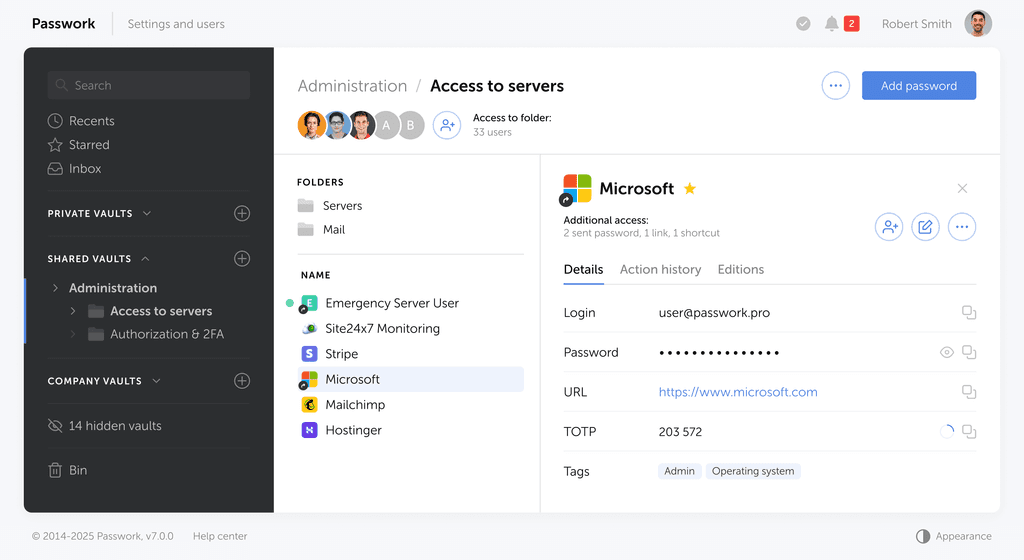
Self-hosted password manager for business
Passwork provides an advantage of effective teamwork with corporate passwords in a totally safe environment. Double encryption and zero-knowledge architecture ensure your passwords never leave your infrastructure.
Learn more